The Domain Name System (DNS) is often called the “phonebook of the internet.” It translates human-friendly domain names into the numerical IP addresses computers use to communicate.
Because DNS is a foundational internet service, it is also a prime target for cyberattacks — making DNS security a critical component of any organization’s cybersecurity strategy.
Why DNS Security Matters
- Cybercriminals exploit DNS to launch a variety of attacks, including:
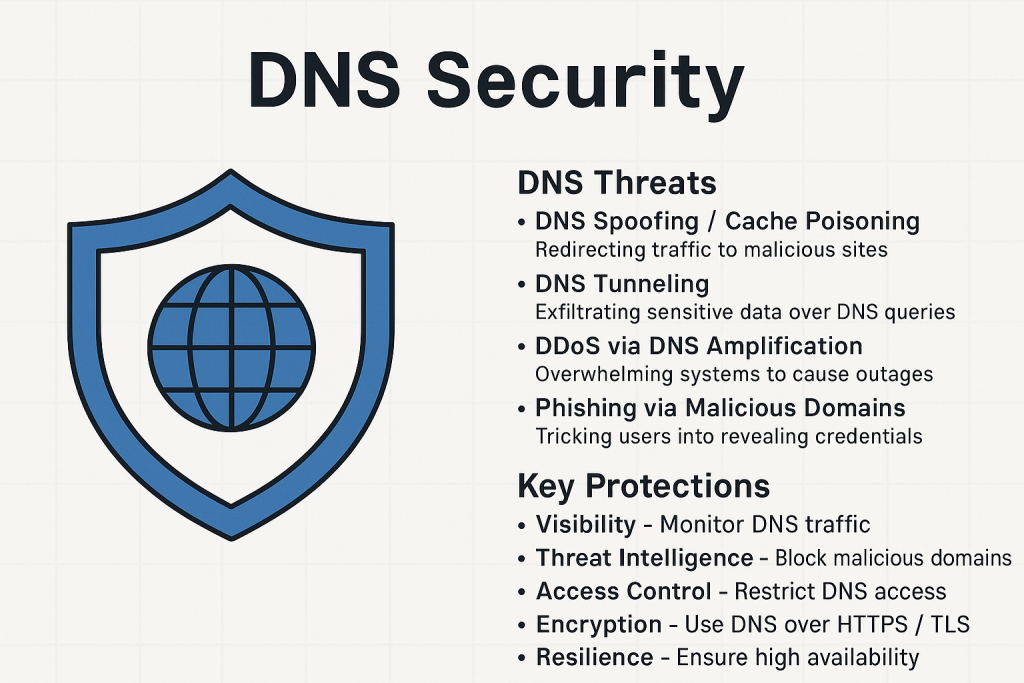
- DNS Spoofing / Cache Poisoning – Redirecting traffic to malicious sites.
- DNS Tunneling – Exfiltrating sensitive data over DNS queries.
- DDoS via DNS Amplification – Overwhelming systems to cause outages.
- Phishing via Malicious Domains – Tricking users into revealing credentials.
- A breach at the DNS level can compromise entire networks, disrupt services, and damage an organization’s reputation.
Core Principles of DNS Security
Visibility – Monitor DNS traffic in real-time to detect anomalies.
-
Threat Intelligence Integration – Use up-to-date threat feeds to block known malicious domains.
-
Access Control – Restrict DNS resolution to approved servers and networks.
-
Encryption – Implement DNS over HTTPS (DoH) or DNS over TLS (DoT) to protect query privacy.
-
Resilience – Deploy redundant DNS servers and disaster recovery plans.
Best Practices for a Strong DNS Security Posture
-
Monitor and Log All DNS Activity – Early detection of suspicious requests can prevent breaches.
-
Apply Layered Protection – Combine DNS firewalls, endpoint protection, and network monitoring.
-
Use Split-Horizon DNS – Keep internal and external DNS views separate to reduce exposure.
-
Automate Threat Blocking – Proactively block malicious domains before users can access them.
-
Conduct Regular Security Audits – Ensure configurations follow industry best practices.
The Bottom Line
DNS is at the heart of every digital transaction. Securing it isn’t just a technical necessity it’s a business imperative. By implementing advanced DNS security measures, organizations can stop attacks before they spread, protect sensitive data, and ensure uninterrupted service availability.